Brewsmith Hoppy Heart II – Review

A few weeks ago we revisited Brewsmith’s Hoppy Heart IPA.  We originally did this one way back in May, but we wanted to try it again, so we did!

All in all, it was a pretty similar beer to before, but it wasn’t exactly the same.  This can happen sometimes if we did things at different temperatures, especially the fermentation.  Every brew is different!  While commercial breweries take a lot of care to make sure each batch is exactly the same, we didn’t…  Seasonality can often affect raw material flavours as well, so an autumn brew can be different from a spring brew.

Hoppy HeartCompared to my review of the previous batch, this beer was a bit more laid back in terms of the hops.  The smell was great: sticky and malty with a bit of a metallic feel, not a lot of hops though.  From the beginning, the beer felt very malty.

This continued on through the initial taste.  There was a great long bitterness, characteristic of an IPA, but there wasn’t much interaction of different hop flavours.  It was a nice single bitterness.  This was behind the sweetness and malt, which was primary, at least at first.  I would have preferred a little more spectrum in there, but it was still a great beer.

I’m not sure why this batch was generally sweeter than before.  It possible it’s just how we steeped the grains as well as fermentation temperatures.

Towards the end, the bitterness did start to take over a bit more and the sweetness got pushed out of the way.  I usually find this happens in an IPA; the bitterness builds up in your mouth.  I quite enjoyed this, and it was in no way overpowering.

All in all this was a fairly sessionable IPA, but maybe a little heavy for too many.

I always enjoy an IPA with curry, and I’m going to maintain this opinion.  So get some curry and pop open an IPA.-Chas

Tagged , , , , , ,

When is it cheating?

Hi all!

Yes, I haven’t written anything in awhile.  Since the fifth of November to be precise.  Don’t worry, Mikey has had stern words to me.  I haven’t done a brew in a few weeks either!  Once again, Mikey has had stern words to me.

Since I haven’t brewed in awhile, I figured I’d share some thoughts.  This comes from a conversation Mikey and I had a few weeks ago.

With a variety of brewing methods available: extract, steeped grains, mini-mash, all grain, and combinations there of; when is it cheating?  At what point can you no longer say “I made this beer”?

Purists will probably say all grain is the only way to go.  If you’re not mashing the grains yourself, and therefore not making your own malt, you’re not actually making your own beer.  I’m sure there are even those who say one must even mill their own grain!  But then you should also be growing your own grain and therefore your own hops… you should have your own lab to culture your own yeast.  Where does it end?

However, the steeped grain process offers a great opportunity to experiment with the flavours from various (unmalted) specialty grains.  All this process is doing is freeing the brewer from the “burden” of mashing their own grains.  And mashing isn’t terribly difficult; while it’s possible to “get it wrong” or do it well/badly, it’s actually a simple process.  So, at the risk of being extremely controversial, it’s not the be all and end all of home brewing.

Even with extract brewing, the brewer has the opportunity to add their own hops for extra flavours.  Either the brewer is inexperienced and still experimenting, wants something simple for whatever (completely valid) reason, or that’s simply the brew they want to do.

So I guess the real question is: is extract brewing cheating?  Is the idea of a kit and kilo a little too easy?  The process is extremely simple: dump some pre-made stuff in a bucket, add water, and you’re done.  Ignoring the fact that this is a great way for people to learn the basics and realise the importance of sanitising, it is a bit like ready to eat cake mix.  If you just add water and stick it in the over, can you still say you baked a cake?

Well… ultimately who cares?  For a hobbyist, it really just matters that you’re enjoying yourself.  Home brewing is a great hobby not only because it’s excessively fun, but you also get a great product at the end that you can share with your friends.  And friends always enjoy sharing beer with each other.

I was at a mate’s party a few weeks back and he asked me to bring some home brew.  He didn’t give me enough time to make a batch just for the party so I just brought what I had on hand: and extract brew.  Everyone loved it!  Of course I said it was an extract brew – I wasn’t going to take credit for a brilliant all grain – but people were still interested in it and interested in the process.  I enjoyed making that beer and I enjoyed drinking it with friends.

So really, it’s never cheating.  Do what you enjoy!

-Chas

Tagged , , , , , , , ,

New and old, recipe and brewer mix up

Saturday brew day was a long one, nearly 5 hours. I wanted to have another crack at the Baltic Porter. Chas wasn’t available so my mate Kilan came over to give me a hand.

Kilan has done a bit of home brewing over the last few years. Most of his equipment is in storage. He’s still been able to make some cider and brought over a bottle to share. Will talk about that later.

Was fun to have Kilan over for the arvo. We worked on a few things that neither of us had done before. Had a couple near misses and a whole heap of improvisation. By the end of the day we had bottled the Hoppy Heart IPA and brewed what we felt would be a really good beer.

The last time I did the Baltic Porter it was a 10 litre batch. The beer came out nice enough but lacked some body. The beer had a little too much sweetness. There was room to adds more complexity. In short, there was a lot that could be tweaked.
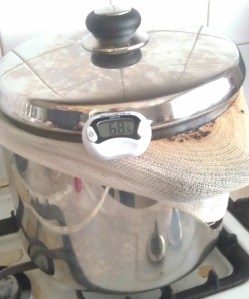
Baltic Porter #2 Mash

Baltic Porter #2
Grains in bag, in pot and mashing

Given the relative ease of the full grain mash at Chas’s last week I thought of trying a mini mash. The recipe was upping to a 17 litre batch and ingredients to match. That meant a lot more grain. Last time the recipe only had Crystal grains, which can’t mass by themselves. With advice from Chas I decided to include some Chocolate malt, which I believe can mash. So all 2kg of the grain went in to mash.

Kilian was a champ and crushed the chocolate malt grain. The only thing I had was a mortar and pestal which meant some grain got crushed. Hope that doesn’t make much difference.

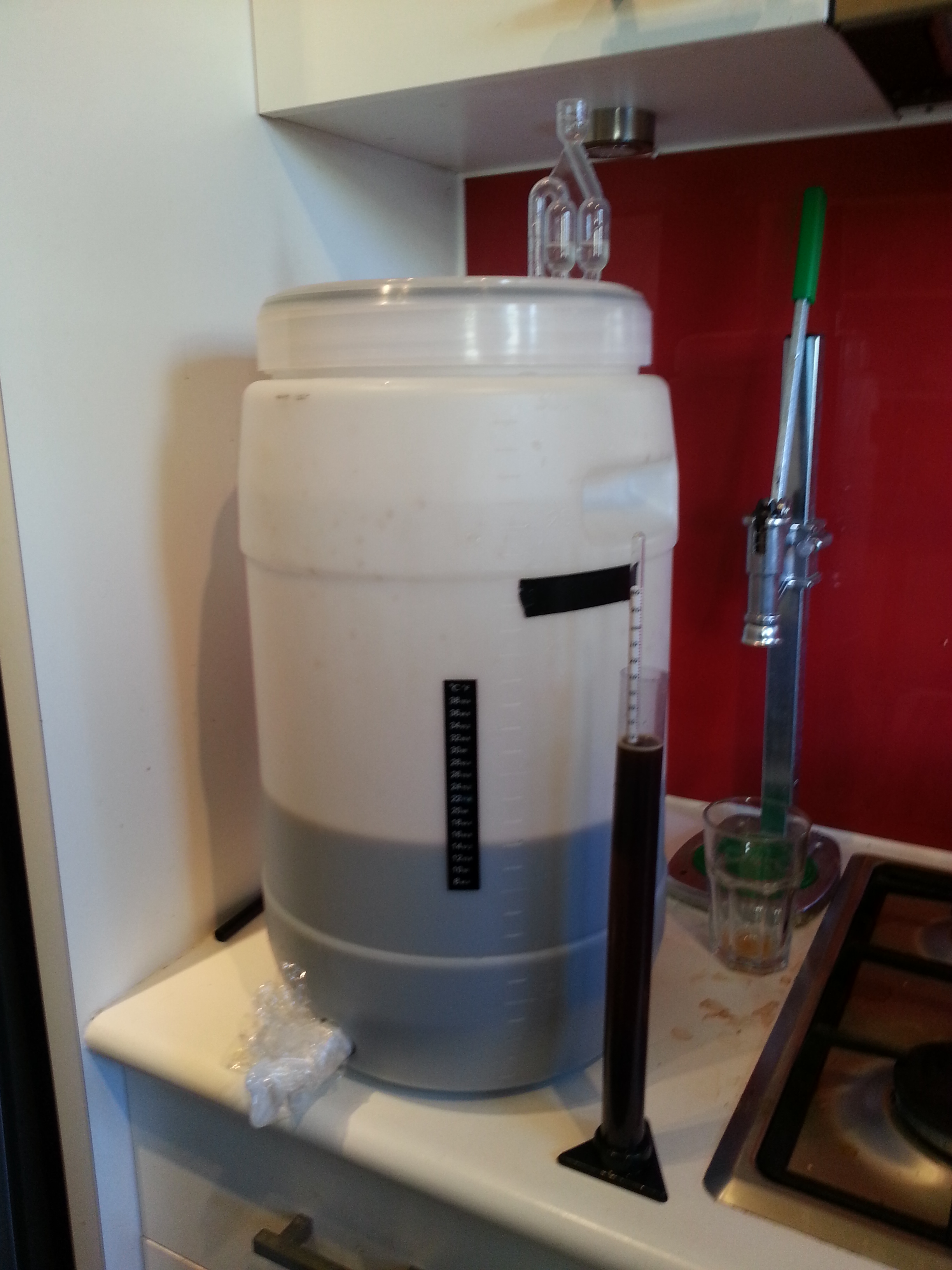
The Crystal grain went into a grain bag and into the pot. The Chocolate grain got thrown into the bag then all was stirred in. Mash was done at 68°C and had 5 litres of water. Wow, that grain soaked it all up and expanded like a balloon! Mash went for a full sixty mins.

While waiting for the mash to finish we bottled the Hoppy Heart IPA. The final gravity came in at 1.019. With the carbonation drops it will be 6.4% alcohol. And before you ask, yes I will move to bulk priming soon.

We opened the apple cider that Kilan brought. That was an interesting drink, and I mean that in all ways. We chilled it right down and was cold most of the time. First up it tasted like alcoholic orange juice, not like apple. Sort of super sweet and slightly tart. The smell was pretty bad, almost like something off. As it warmed up the cider became more like apple and more dry. Much better cold. I think something might have gone wrong with the yeast and / or fermentation. Let’s see euchre same thing happens to my cider.

Back to the brew, and mash was done. Only problem now was how to sparge the grain. And there was a huge amount. Was fortunate that the kettle we have at home has different temperature settings with the lowest being 75°C. So we used that and poured the water over the bag of grains. Each time we tried to press out as much liquid as possible, but we didn’t really have the right set up. After a few kettle’s worth of water at said temperature there was a lot of volume for the boil. I would have liked to do more sparging, but the boil pot just wouldn’t hold it all.
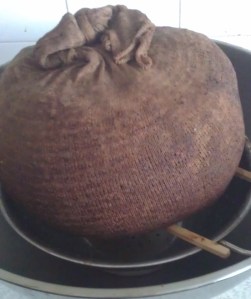
Baltic Porter #2 Grains

Baltic Porter #2
Grains ready for more sparging

So onto the boil. Earlier I realised that I didn’t have the exact amount of hops to do what I wanted. There wasn’t as much Warrior and that was suppose to be the bittering. As a compromise I moved some of the Fuggles from aroma stage to taste. By moving them earlier it should add a bit more bitterness, and hopefully balance. Will have to wait and see.

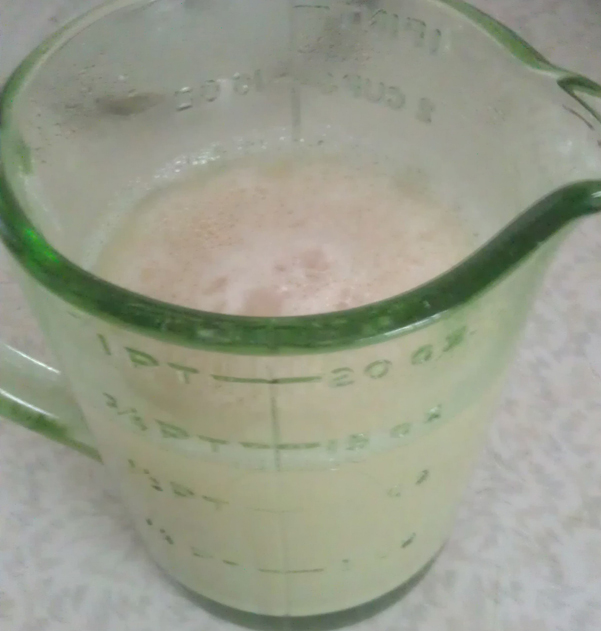
Once the boil started we re-hydrated the yeast. It’s the first time I’ve done this. It was pretty easy. The only problem is the water that was boiled so early on it cooled down too much. A quick zap in the microwave brought it back up to temperature. The yeast sat in the water while we dissolved the tea spoon of dry malt in half a glass of boiled water. Then waited half an hour before adding that in and gave it a mix.

I held off on adding the dry malt for a bit. Have been getting advice not to add all malt at the start of boils and wanted to try it out. As a result we didn’t get a hot break, it just came to a boil. Bittering hops went in at start, then taste hops at thirty minutes with the first 800 grams of dry malt a five minutes later. Another fifteen minutes later added in the last 400 grams of dry malt. Five mins after that the aroma hops. Then only five more mins before flame out.

Pot was transferred to an ice bath. Some ice cubes went directly into the wort, water previously boiled before frozen. A second bath for the pot. Then into the fermenter. Added a little more sparged grain liquid, that might not have been the best idea as I’m not sure if that could have lead to contamination. Too late now! The liquid malt only went in at this stage, note that it wasn’t part of the boil. Not sure if that will make much difference. Let me know what you think with a comment below.

The wort was still quite hot. That was even after adding about four litres of very cold water. Will need more ice if I’m going to do something this large and this method again. After a couple hours the temperature was down to something close to what I wanted. Yeast was pitched at about 25°C. I forgot to put the yeast nutrient in at the same time. So, went back an hour later and put in four heaped teaspoons and sealed back up.
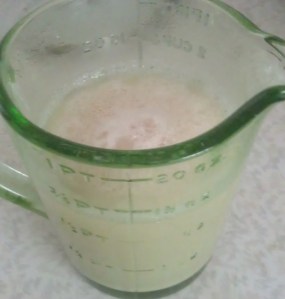
 

Baltic Porter #2 Yeast

Baltic Porter #2
Re-hydrated Yeast in the jug

60 min mash at 68°C

– 1.5 kg of Crystal 120
– 500 grams of Chocolate Malt 600

Boil wort from mash
60 min
add 8 grams of Warrior hops
30 min
add 14 grams of Fuggels hops
25 min
add 800 grams of light malt extract
10 min
add 400 grams of light malt extract
5 mins
add 5 grams of Fuggels hops

Into ferment:
– wort
– 1.7 kg of Amber liquid malt extract (Black Rock)
– water & ice to bring to 17 litres

Once at 25°C
add 7 grams of yeast, 5g Windsor & 2g kit yeast (previously re-hydrated)
add 4 heaped teaspoons of yeast nutrient

A bit of a strange brew. Some new techniques and processes. Some corrections from previous brews. Some ingredients just thrown together, like hops and yeast. The final gravity came in at 1.071 which is pretty good given the calculated was only 0.002 higher than that. If fermentation can take it down to 1.025 that will mean about 6.5% alcohol before bottling. And this one will be bulk primed.

-Mikey

Tagged , , , , , , , , , , , , , , ,

Honey Bomb Wheat – Review

Honey Bomb Wheat #1

Honey Bomb Wheat #1 ready for tasting

On Sunday we did a brew at Chas’s place. It was fun and you can read all about it. As well as having another attempt at The Friedlieb Coffee Porter we also got to taste the Honey Bomb Wheat that we bottled a couple weeks ago.

When we brewed this about a month ago we were surprised that there wasn’t any speciality grain. Normally the BrewSmith kits include some. But it doesn’t seam to have been an issue here.

After pouring the first thing you notice is a sweet light aroma. Hints of apricot and peach smells coming out. Overall it is soft.

First taste, sweet up front and light. A bit of citrus is there. Then the sweetness, which is clearly from the honey, builds. This is slightly creamy, maybe due to the honey used. Around mid way the apricot flavour comes in. This works pretty well with the honey sweetness. At the end there it’s a dryness that creeps in. It is strange as the sweetness doesn’t drop away. Overall it leaves an odd dry sweet finish.

Food matching, maybe some fruit or cheese. Great for a beer at a picnic or to kick off a party where there’s sweet snacks.

I was never going to make this kit, as I’m not a fan of wheat beers. But I’m glad Chas decided to do this. While there is no clear wheat beer flavours in this, and it being a nice light beer, I’m not likely to want to get one of these kits myself. Tasty beer.

-Mikey

Tagged , , , , , , ,

Cap off, Cup day crazyness

Tuesday was Melbourne Cup day. The race that stops a nation. Well, nearly. I forgot to turn on the TV and only got to see the winning jockey and trainer being interviewed. Whoops.

But that’s not what Tuesday was about. Tuesday was a very special day. I went a little crazy and made some cider.

Yep, the guy who normally doesn’t drink the stuff has made some. It came around due to a couple points. First, summer is coming up and need some more ‘lighter’ drinks. Second, with summer comes festivals and outdoor events. They don’t normally like you bringing in glass bottles which means using plastic bottles.

I’ll be getting around to brewing some pale ales. And I’ll get around to trying plastic bottles for beer, actually it will be this weekend. This cider crazyness is all about me experimenting. I didn’t even have Chas helping out!

Those who know us or have been reading our posts for a while will know that we’re fans of Craig Tube. For those who don’t know him, he’s a Canadian home brewer who has been posting videos up on home brewing for years. There’s a lot if great instructional videos on kit and extract brewing. If you’re starting off go check out the Easy Home Brewing – Beer series.

Anyway, Craig did a mini review of some Pat Mack’s Home Brewing Caps. They allow you to ferment in a bottle! It looked really easy, like a lot more than what you do for a kit. So, I ordered some online and waited a few weeks for them to make their way from London to Melbourne.

The caps come with “Champaign” yeast, which is high alcohol producing yeast. The pack also comes with a couple recipes and a whole lot more online.

The promotion of these caps has been about producing cider. So, I thought that would be appropriate to try that. The recipe only needs apple juice and sugar, easy! There were two caps in the kit I bought and wanted to try two variations with different amounts of sugar.

Apple Cider 1+2

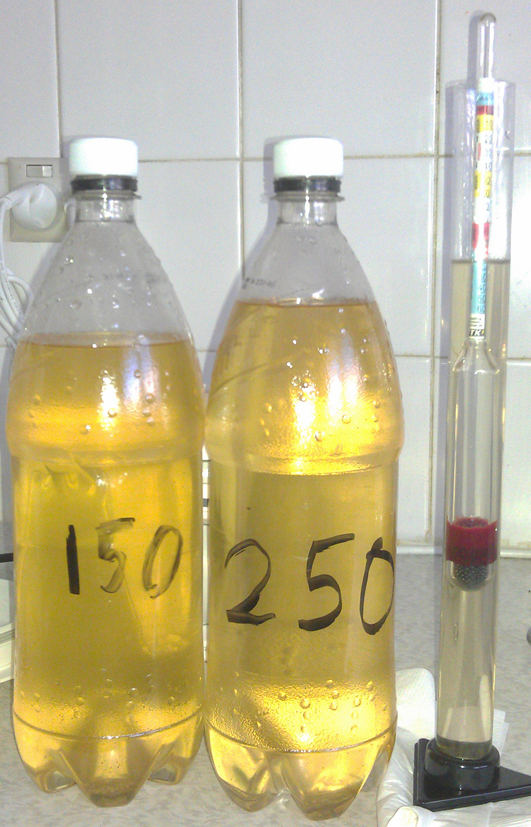
Apple Cider #1 and #2 in bottles with gravity reading

Bottle 1.
1.2 liters of apple juice
150 grams of sugar.
1/8 th (ish) teaspoon of yeast.
1/4 th (ish) teaspoon of yeast nutrient.

Bottle 2.
1.2 liters of apple juice
250 grams of (caster) sugar.
1/8 th (ish) teaspoon of yeast.
1/4 th (ish) teaspoon of yeast nutrient.

Process is exceptionally easy. Put juice in blender. Add sugar. Blend. Pour into bottle. Add yeast (and nutrient). Put lid on. Shake. Done.

The yeast nutrient was probably not required. But after the low fermentation I’d a few beers at my place I didn’t want to take any risks.

A you can see the only difference is the amount of sugar. I deliberately wanted to see how the difference in sugar levels would work. Of course the gravity readings were going to be high. I sort of expected something like the 1.089 original gravity for bottle 1. But was still a little shocked when it came in as 1.111 for bottle 2.

The idea is to only let it ferment for a week. Then they will go in the fridge for a week to settle out. In theory this should prevent full fermentation. That means it should still be sweet and should not be too high in alcohol. Will wait and see.

-Mikey

Tagged , , , , ,

Friedlieb Coffee Porter – Second Trial

Back in June, Mikey and I made a coffee porter that I named The Friedlieb. It turned out great, but I was after a little bit more peat smoke in there, and Mikey found some of the sweetness “distracting”.

Coffee!

Coffee!

So we modified the recipe a little bit.  First off, we were doing twelve litres this time around, not the four we originally did; mostly we just multiplied everything by three.  We also added a bit more peated barley, a bit less light liquid malt extract, and, as there were some malted grains in the grain bill, decided to mash the grains rather than just steep them.  Hopefully this achieves the desired affects.

Anyway, before I go into the recipe, as mentioned, this is a coffee porter.  When we made the first batch, we were only using eight shots of coffee, which isn’t too difficult or expensive.  Upping things up to twenty four shots of coffee wouldn’t have been too expensive or difficult, but there’s always a better way!  So, a big thanks to my good friend from Husband Cafe for supplying his wastage.

So the recipe (for 12 litres) was:

  • 1.5 kilograms golden light liquid malt extractFried 4
  • 270 grams dark dry malt extract
  • 270 grams dark crystal
  • 150 grams chocolate malt
  • 180 grams peated malt
  • 150 grams melanoidin malt
  • 180 grams rye malt
  • 9 grams Willamette hops (bittering) – 30 minutes
  • 9 grams Fuggles hops (taste) – 15 minutes
  • 9 grams Fuggles hops (aroma) – 0 minutes
  • 24 shots espresso
  • 3 cups brown sugar
  • Windsor style ale yeast

As mentioned, we decided to mash the grains.  The right mashing temperature can change depending on what you’re after and what grains are being used, but we were winging it a bit and just decided to mash at 65 degrees C; it’s nice and middle of the road.  The mash time was 60 minutes in 5 litres of water.

Unlike the all grain pale ale we did a couple weeks ago, we didn’t have as much trouble keeping the water temperature steady.  This was probably because we were using much more water.

So the grains sat there for an hour while Mikey and I bottle the pale ale.  It tasted great by the way, but we think it will need quite a bit of time in the bottle to calm down.

With the mashing done, we threw in the malt extracts and got everything to a boil.

Once the boil started everything was pretty standard.  The bittering hops went in at the start, fifteen minutes in came the taste hops, and the aroma went in at flame out another fifteen minutes later.  Along with the aroma hops we threw in the espresso and the brown sugar.

A little tip on ingredients: always double check that you have the ingredients.  I assumed I had enough brown sugar but I didn’t!  Thankfully I was able to steal some from my housemate.  Also, let’s see if my housemate actually reads this blog, because she doesn’t know I took it!

Fried 1Getting the wort cold was difficult.  We ended up with about seven litres of liquid: five litre mash, a couple litres for sparging, coffee, etc.  We got it coldish pretty quickly with some ice and cold water, but even in three ten minute water baths it wouldn’t drop below 30 degrees.  I need to start taking a cue from Mikey and preparing lots of ice and cold water.

Anyway, we poured everything into the fermenter, topped it up to 12 litres, and took a quick break on the homebrew couch while we let things cool a little.  The wort was about 27 degrees by the time we topped up the fermenter, but we wanted a few degrees lower.

After that, we pitched the yeast and gave it a good stir to aerate it.  The gravity reading was 1.073, which is quite high, so we wanted to get plenty of oxygen in there.  I’m quite excited about this high gravity.  The mash obviously added quite a bit.  If we’re lucky and get the final gravity down enough, hopefully we’ll end up with quite a strong beer!

I’m really excited about this beer.  It’s going to be about two weeks in the fermenter, and then quite a bit of time in the bottle.  We’ll report in after that.

-Chas

Tagged , , , , , , , ,

Mangrove Jack’s IPA – Review

As you might remember, when Chas returned from his trip overseas we had a brew day at his place. Not sure what to brew he picked up a kit of the Mangrove Jack’s IPA, new yeast and a booster.

Mangrove Jacks IPA 1

Mangrove Jack’s IPA #1 ready for tasting

After two weeks in the bottle we tried a bottle. The beer was okay but still quite rough, even in the middle. The flavours were there but it wasn’t working all together. We decided to give it another week and try again. Over the weekend we did exactly that.

First up is the soft spice hop aroma. Very slight sweetness at the end. A fair amount of fruit aroma which is what you would hope and want from the style.

Taste up front is refreshing and light. Bit of stone fruit and grassy flavors are there. The bitterness picks up slowly and builds most of the way through. Around the middle the body drops away a bit. The beer gets dry and slightly tart. There’s a slight metallic flavour that comes in. This last part is the least enjoyable bit of the beer.

As the beer warms a little it becomes more balanced. The fruit flavors become more pronounced. The metallic flavour drops away to just be at the end. This makes the beer a lot eater to drink and enjoy.

Overall this is quite good for an off the shelf kit. Taste is good, body is alright and the finish is okay.

The booster really helped this beer. Extra dry malt was really needed here.The replacement yeast and extra Cascade hops also helped. Interestingly this beer only came in at 4% alcohol. That’s below what you would expect for the style, this should be 5.5% or higher. That said, it doesn’t really make much difference to the beer flavour or feel.

Food wise, this could work with a few things. Would work with anything with meat and sauce/marinated. That can including seafood all the way through to stake. The fruit side of the beer would play nicely. The meat should help sideline the slight dry tart metallic elements of the beer.

This is a good beer. It’s hard to work out what caused the elements I don’t like. Maybe it’s the base kit, maybe the fermentation or yeast. Really anything. That said, would be happy to return to this and brew again.

-Mikey

Tagged , , , , ,

Return of an old kit, now colder

Sunday was brew day at my place again. Yay! I’m enjoying the small batches and this was another one.

First up was bottling the Australian Wattle Pale Ale. Got pretty carried away and nearly forgot to take a sample for the final gravity. Was happy with the final reading of 1.014 which means it will be 4.2% ABV after conditioning in the bottles. The sample for gravity was also our sample. Have to say it was very rough and bitter. Might need more than the regular two weeks conditioning.

Worth nothing that this was the first beer that I’ve had proper temperature control. The sensor was attached and set at 22°C. There is one degree buffer range on the sensor. This meant brewing temperature was kept between 21.0°C and 22.5°C. That top range estimate as I wasn’t constantly checking. I wasn’t even checking that often. Anyway, point is that there was some control on this fermentation.

After all the bottling was done it was time for the next brew. This time it was a return to the BrewSmith Hoppy Heart IPA. I quite liked the last batch and wanted another lighter flavoured beer before trying the Baltic Porter again.

Hoppy Heart and Aussie Wattle

Hoppy Heart IPA in carboy in blanket and Aussie Wattle Pale Ale in bottles.

Had fun with this brew. Read the instructions before starting, after the mess that was the Pale Ale. The kit was straight forward and everything went to plan.

Did a couple extra things. For the steeped grains did a sparge to rinse out more flavour, colour and sugars. Thus gave a slightly darker beer but should be more flavour.

Also played around with the cold break. Used two 1.25L bottles with frozen water as ice blocks to cool the original water. This worked well. Also added about a litre of chilled water direct to the wort. After ten minutes changed over the water. As part of this I poured the near-frozen water into the sink for the bath, and topping up the bottles with tap water to continue the chilling effect. The wort wasn’t chilled enough enough after another 10 minutes. So a third bath was required. It was only now that I realised there were two trays if ice specifically prepared. They were thrown in. As a result the temperature dropped too much and there was too much wort.

The wort only just fit into the carboy. A lot of shaking later, for oxygenation, we took a sample for gravity. It came in at 1.064 which is quite alright. Yeast was pitched and put away with temperature set at 21°C. So, should ferment at 20° to 21.5°.

The day went well. Bottling and brewing on the smaller scale if things is nice. Plus return to a nice beer that was chilled, and will be fermented, cooler than before.

– Mikey

Tagged , , , , , , , , , ,

Cross promotion, check it out!

A while ago I had a  series of posts about my Journey to Home Brew. In the second post I mentioned about how I did 366 Days Of Home Brew. I also mentioned about how my mate Ian has his website.

Well now I can finally reveal that I’ve got all 366 beers up. Check out my site Beer With Mikey. The site will have a lot of my beer reviews on there. I recommend reading the introduction. And for those who don’t have the time to go though all the beers, or the monthly summaries, you can jump straight to the final summary which includes the top beers.

The 366 Days Of Beer is just the start. There’s another 61 beers that were had, as there were more beers than days.  Next up I’ll be putting up the beers from the Singapore Craft Beer Week 2012. Then there will be beers from the Ballarat Beer Festival 2013. There’s a lot from that one day. Also from this year is Good Beer Week 2013 and, if I have all the info, I’ll put up the reviews for the Great Australian Beer SpecTAPular 2013.

It will keep me busy. I hope you enjoy it. And, don’t worry, I’ll still be brewing beer and posting stuff here with Chas.

-Mikey

Tagged , , ,

Let’s do this! Red Dog Pale Ale

Well, another weekend another brew day.

We decided to step it up a notch this weekend and go for an all grain batch.  It was a relatively small notch though.  While the batch was an all grain, it was kept to only four litres and the mashing was done in a bag using the brew in a bag (BIAB) technique.  No malt extract was used though, so it wasn’t a mini-mash.

Anyway, the recipe we used was courtesy of jyo on the Aussie Home Brewer Forums and can be found here.  You’ll note that the original recipe was for a 23 litre batch, however we modified the quantities to only make four litres.

The modified recipe was:

Brewing in a bag!

Brewing in a bag!

  • 782 grams Joe White Traditional Ale Malt
  • 7 grams Crystal
  • 5 grams Weyermann Carapils
  • 7 grams Cascade hops (bittering) – 60 minutes total boil
  • 5 grams Cascade hops (taste) – 15 minutes total boil
  • 5 grams Chinook hops (aroma) – 1 minute total boil
  • DCL US 05 American Ale Yeast
  • 4 grams Cascade hops (dry hopping) – after 2 days

Mashing temperature was called for 65 degrees C.

The recipe called for a 90 minute mash, which is what we did.  The BIAB technique is pretty simple.  First we calculated the strike temperature which was pretty simple and got three litres of water up to this temperature in a pot.

This technique is called brew in a bag because the grains were kept in a bag while submerged in water.  While this was easy, keeping the temperature at exactly 65 degrees was fairly difficult.  The pot seemed to keep heat fairly well, but there were large discrepancies in different areas when we took temperature readings.  If anything we probably should have used more water.

For those more interested in the procedure, Craig from Craigtube does a great demonstration here.

While we waited for the grain to mash, Mikey and went ahead and bottled the Honey Bomb Wheat Beer we made a couple weeks ago.  There was a fair bit of time to kill during the mashing process, so between checking it and adjusting the temperature we bottled and knocked back a couple home brews on the Home Brew Couch.

About to get the hot break

About to get the hot break

With the mash done, it was sparged with another couple of litres of water and we started the boil.  During the sparge we could really tell that the sugar had come out of the grain.  We were left with a great, thick liquid that was a beautiful brown colour.  And it smelled amazing.

From there it was pretty much the same as any other brew.  The hops were added for bittering, taste, and aroma.  Two days later I added some more hops as a dry hopping.

When we were all done, we got a OSG of 1.042.  Unfortunately the recipe stated an OSG 1.053, so we were a bit off…  I attribute this not only to our temperature difficulties with the mash, but also because we ended up topping the carboy up to four and a half litres rather than four; so it was watered down a little more than it should be.

I’m expecting quite a bit from this brew.  I think it should turn out to be a fairly decent American Pale Ale.  The wort tasted great and full of grain, but it should be fairly well combated by the hop additions.  We’ll see how it is in a couple weeks!

– ChasRed Dog1

Tagged , , , , , , , , , , ,