Tag Archives: home brew

When is it cheating?

Hi all!

Yes, I haven’t written anything in awhile.  Since the fifth of November to be precise.  Don’t worry, Mikey has had stern words to me.  I haven’t done a brew in a few weeks either!  Once again, Mikey has had stern words to me.

Since I haven’t brewed in awhile, I figured I’d share some thoughts.  This comes from a conversation Mikey and I had a few weeks ago.

With a variety of brewing methods available: extract, steeped grains, mini-mash, all grain, and combinations there of; when is it cheating?  At what point can you no longer say “I made this beer”?

Purists will probably say all grain is the only way to go.  If you’re not mashing the grains yourself, and therefore not making your own malt, you’re not actually making your own beer.  I’m sure there are even those who say one must even mill their own grain!  But then you should also be growing your own grain and therefore your own hops… you should have your own lab to culture your own yeast.  Where does it end?

However, the steeped grain process offers a great opportunity to experiment with the flavours from various (unmalted) specialty grains.  All this process is doing is freeing the brewer from the “burden” of mashing their own grains.  And mashing isn’t terribly difficult; while it’s possible to “get it wrong” or do it well/badly, it’s actually a simple process.  So, at the risk of being extremely controversial, it’s not the be all and end all of home brewing.

Even with extract brewing, the brewer has the opportunity to add their own hops for extra flavours.  Either the brewer is inexperienced and still experimenting, wants something simple for whatever (completely valid) reason, or that’s simply the brew they want to do.

So I guess the real question is: is extract brewing cheating?  Is the idea of a kit and kilo a little too easy?  The process is extremely simple: dump some pre-made stuff in a bucket, add water, and you’re done.  Ignoring the fact that this is a great way for people to learn the basics and realise the importance of sanitising, it is a bit like ready to eat cake mix.  If you just add water and stick it in the over, can you still say you baked a cake?

Well… ultimately who cares?  For a hobbyist, it really just matters that you’re enjoying yourself.  Home brewing is a great hobby not only because it’s excessively fun, but you also get a great product at the end that you can share with your friends.  And friends always enjoy sharing beer with each other.

I was at a mate’s party a few weeks back and he asked me to bring some home brew.  He didn’t give me enough time to make a batch just for the party so I just brought what I had on hand: and extract brew.  Everyone loved it!  Of course I said it was an extract brew – I wasn’t going to take credit for a brilliant all grain – but people were still interested in it and interested in the process.  I enjoyed making that beer and I enjoyed drinking it with friends.

So really, it’s never cheating.  Do what you enjoy!

-Chas
Tagged , , , , , , , ,

Honey Bomb Wheat – Review

Honey Bomb Wheat #1

Honey Bomb Wheat #1 ready for tasting

On Sunday we did a brew at Chas’s place. It was fun and you can read all about it. As well as having another attempt at The Friedlieb Coffee Porter we also got to taste the Honey Bomb Wheat that we bottled a couple weeks ago.

When we brewed this about a month ago we were surprised that there wasn’t any speciality grain. Normally the BrewSmith kits include some. But it doesn’t seam to have been an issue here.

After pouring the first thing you notice is a sweet light aroma. Hints of apricot and peach smells coming out. Overall it is soft.

First taste, sweet up front and light. A bit of citrus is there. Then the sweetness, which is clearly from the honey, builds. This is slightly creamy, maybe due to the honey used. Around mid way the apricot flavour comes in. This works pretty well with the honey sweetness. At the end there it’s a dryness that creeps in. It is strange as the sweetness doesn’t drop away. Overall it leaves an odd dry sweet finish.

Food matching, maybe some fruit or cheese. Great for a beer at a picnic or to kick off a party where there’s sweet snacks.

I was never going to make this kit, as I’m not a fan of wheat beers. But I’m glad Chas decided to do this. While there is no clear wheat beer flavours in this, and it being a nice light beer, I’m not likely to want to get one of these kits myself. Tasty beer.

-Mikey

Tagged , , , , , , ,

Cap off, Cup day crazyness

Tuesday was Melbourne Cup day. The race that stops a nation. Well, nearly. I forgot to turn on the TV and only got to see the winning jockey and trainer being interviewed. Whoops.

But that’s not what Tuesday was about. Tuesday was a very special day. I went a little crazy and made some cider.

Yep, the guy who normally doesn’t drink the stuff has made some. It came around due to a couple points. First, summer is coming up and need some more ‘lighter’ drinks. Second, with summer comes festivals and outdoor events. They don’t normally like you bringing in glass bottles which means using plastic bottles.

I’ll be getting around to brewing some pale ales. And I’ll get around to trying plastic bottles for beer, actually it will be this weekend. This cider crazyness is all about me experimenting. I didn’t even have Chas helping out!

Those who know us or have been reading our posts for a while will know that we’re fans of Craig Tube. For those who don’t know him, he’s a Canadian home brewer who has been posting videos up on home brewing for years. There’s a lot if great instructional videos on kit and extract brewing. If you’re starting off go check out the Easy Home Brewing – Beer series.

Anyway, Craig did a mini review of some Pat Mack’s Home Brewing Caps. They allow you to ferment in a bottle! It looked really easy, like a lot more than what you do for a kit. So, I ordered some online and waited a few weeks for them to make their way from London to Melbourne.

The caps come with “Champaign” yeast, which is high alcohol producing yeast. The pack also comes with a couple recipes and a whole lot more online.

The promotion of these caps has been about producing cider. So, I thought that would be appropriate to try that. The recipe only needs apple juice and sugar, easy! There were two caps in the kit I bought and wanted to try two variations with different amounts of sugar.

Apple Cider 1+2

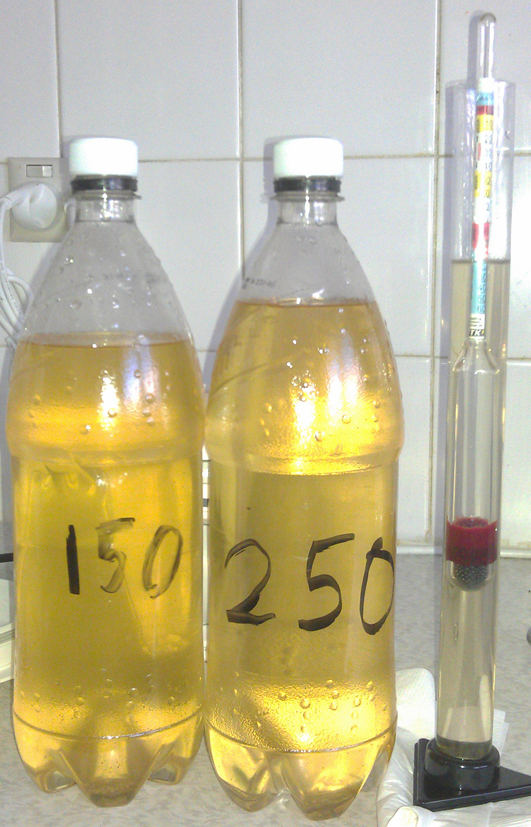
Apple Cider #1 and #2 in bottles with gravity reading

Bottle 1.
1.2 liters of apple juice
150 grams of sugar.
1/8 th (ish) teaspoon of yeast.
1/4 th (ish) teaspoon of yeast nutrient.

Bottle 2.
1.2 liters of apple juice
250 grams of (caster) sugar.
1/8 th (ish) teaspoon of yeast.
1/4 th (ish) teaspoon of yeast nutrient.

Process is exceptionally easy. Put juice in blender. Add sugar. Blend. Pour into bottle. Add yeast (and nutrient). Put lid on. Shake. Done.

The yeast nutrient was probably not required. But after the low fermentation I’d a few beers at my place I didn’t want to take any risks.

A you can see the only difference is the amount of sugar. I deliberately wanted to see how the difference in sugar levels would work. Of course the gravity readings were going to be high. I sort of expected something like the 1.089 original gravity for bottle 1. But was still a little shocked when it came in as 1.111 for bottle 2.

The idea is to only let it ferment for a week. Then they will go in the fridge for a week to settle out. In theory this should prevent full fermentation. That means it should still be sweet and should not be too high in alcohol. Will wait and see.

-Mikey

Tagged , , , , ,

Friedlieb Coffee Porter – Second Trial

Back in June, Mikey and I made a coffee porter that I named The Friedlieb. It turned out great, but I was after a little bit more peat smoke in there, and Mikey found some of the sweetness “distracting”.

Coffee!

Coffee!

So we modified the recipe a little bit.  First off, we were doing twelve litres this time around, not the four we originally did; mostly we just multiplied everything by three.  We also added a bit more peated barley, a bit less light liquid malt extract, and, as there were some malted grains in the grain bill, decided to mash the grains rather than just steep them.  Hopefully this achieves the desired affects.

Anyway, before I go into the recipe, as mentioned, this is a coffee porter.  When we made the first batch, we were only using eight shots of coffee, which isn’t too difficult or expensive.  Upping things up to twenty four shots of coffee wouldn’t have been too expensive or difficult, but there’s always a better way!  So, a big thanks to my good friend from Husband Cafe for supplying his wastage.

So the recipe (for 12 litres) was:

  • 1.5 kilograms golden light liquid malt extractFried 4
  • 270 grams dark dry malt extract
  • 270 grams dark crystal
  • 150 grams chocolate malt
  • 180 grams peated malt
  • 150 grams melanoidin malt
  • 180 grams rye malt
  • 9 grams Willamette hops (bittering) – 30 minutes
  • 9 grams Fuggles hops (taste) – 15 minutes
  • 9 grams Fuggles hops (aroma) – 0 minutes
  • 24 shots espresso
  • 3 cups brown sugar
  • Windsor style ale yeast

As mentioned, we decided to mash the grains.  The right mashing temperature can change depending on what you’re after and what grains are being used, but we were winging it a bit and just decided to mash at 65 degrees C; it’s nice and middle of the road.  The mash time was 60 minutes in 5 litres of water.

Unlike the all grain pale ale we did a couple weeks ago, we didn’t have as much trouble keeping the water temperature steady.  This was probably because we were using much more water.

So the grains sat there for an hour while Mikey and I bottle the pale ale.  It tasted great by the way, but we think it will need quite a bit of time in the bottle to calm down.

With the mashing done, we threw in the malt extracts and got everything to a boil.

Once the boil started everything was pretty standard.  The bittering hops went in at the start, fifteen minutes in came the taste hops, and the aroma went in at flame out another fifteen minutes later.  Along with the aroma hops we threw in the espresso and the brown sugar.

A little tip on ingredients: always double check that you have the ingredients.  I assumed I had enough brown sugar but I didn’t!  Thankfully I was able to steal some from my housemate.  Also, let’s see if my housemate actually reads this blog, because she doesn’t know I took it!

Fried 1Getting the wort cold was difficult.  We ended up with about seven litres of liquid: five litre mash, a couple litres for sparging, coffee, etc.  We got it coldish pretty quickly with some ice and cold water, but even in three ten minute water baths it wouldn’t drop below 30 degrees.  I need to start taking a cue from Mikey and preparing lots of ice and cold water.

Anyway, we poured everything into the fermenter, topped it up to 12 litres, and took a quick break on the homebrew couch while we let things cool a little.  The wort was about 27 degrees by the time we topped up the fermenter, but we wanted a few degrees lower.

After that, we pitched the yeast and gave it a good stir to aerate it.  The gravity reading was 1.073, which is quite high, so we wanted to get plenty of oxygen in there.  I’m quite excited about this high gravity.  The mash obviously added quite a bit.  If we’re lucky and get the final gravity down enough, hopefully we’ll end up with quite a strong beer!

I’m really excited about this beer.  It’s going to be about two weeks in the fermenter, and then quite a bit of time in the bottle.  We’ll report in after that.

-Chas

Tagged , , , , , , , ,

Let’s do this! Red Dog Pale Ale

Well, another weekend another brew day.

We decided to step it up a notch this weekend and go for an all grain batch.  It was a relatively small notch though.  While the batch was an all grain, it was kept to only four litres and the mashing was done in a bag using the brew in a bag (BIAB) technique.  No malt extract was used though, so it wasn’t a mini-mash.

Anyway, the recipe we used was courtesy of jyo on the Aussie Home Brewer Forums and can be found here.  You’ll note that the original recipe was for a 23 litre batch, however we modified the quantities to only make four litres.

The modified recipe was:

Brewing in a bag!

Brewing in a bag!

  • 782 grams Joe White Traditional Ale Malt
  • 7 grams Crystal
  • 5 grams Weyermann Carapils
  • 7 grams Cascade hops (bittering) – 60 minutes total boil
  • 5 grams Cascade hops (taste) – 15 minutes total boil
  • 5 grams Chinook hops (aroma) – 1 minute total boil
  • DCL US 05 American Ale Yeast
  • 4 grams Cascade hops (dry hopping) – after 2 days

Mashing temperature was called for 65 degrees C.

The recipe called for a 90 minute mash, which is what we did.  The BIAB technique is pretty simple.  First we calculated the strike temperature which was pretty simple and got three litres of water up to this temperature in a pot.

This technique is called brew in a bag because the grains were kept in a bag while submerged in water.  While this was easy, keeping the temperature at exactly 65 degrees was fairly difficult.  The pot seemed to keep heat fairly well, but there were large discrepancies in different areas when we took temperature readings.  If anything we probably should have used more water.

For those more interested in the procedure, Craig from Craigtube does a great demonstration here.

While we waited for the grain to mash, Mikey and went ahead and bottled the Honey Bomb Wheat Beer we made a couple weeks ago.  There was a fair bit of time to kill during the mashing process, so between checking it and adjusting the temperature we bottled and knocked back a couple home brews on the Home Brew Couch.

About to get the hot break

About to get the hot break

With the mash done, it was sparged with another couple of litres of water and we started the boil.  During the sparge we could really tell that the sugar had come out of the grain.  We were left with a great, thick liquid that was a beautiful brown colour.  And it smelled amazing.

From there it was pretty much the same as any other brew.  The hops were added for bittering, taste, and aroma.  Two days later I added some more hops as a dry hopping.

When we were all done, we got a OSG of 1.042.  Unfortunately the recipe stated an OSG 1.053, so we were a bit off…  I attribute this not only to our temperature difficulties with the mash, but also because we ended up topping the carboy up to four and a half litres rather than four; so it was watered down a little more than it should be.

I’m expecting quite a bit from this brew.  I think it should turn out to be a fairly decent American Pale Ale.  The wort tasted great and full of grain, but it should be fairly well combated by the hop additions.  We’ll see how it is in a couple weeks!

– ChasRed Dog1

Tagged , , , , , , , , , , ,

Mangrove Jack’s Mildy Dark – review

While I was on my holiday, Mikey did a brew of Mangrove Jack’s Mildly Dark all on his own.  This was a simple extract kit with a few other things thrown in to make it a dark.  Judging from the recipe, Mikey threw a couple extra malts in here, and, if I remember correctly, Mikey mentioned he had trouble getting everything to ferment.

Because of this, the beer took a little longer than usual to condition in the bottle as well.  We tried it a couple weeks ago and it wasn’t quite ready.  We tried it again over the weekend and it was definitely ready.

mildly darkOn the colour, it was a good dark brown with a bit of red when held up to the light.  Dark, but not murky.  It was almost a brown ale in colour, but I’d consider it over the line to be a “dark” ale.

The smell was great and interesting, with quite a bit in there.  The main things in there were toffee, citrus, and apple.  The interaction of the apple and the citrus was great, and really complimented the toffee smells well.  When I really stuck my nose in there, I also was able to find a little bit of chocolate in there too.

The taste was great and easy.  The beer was quite obviously hopped, but mildly so, with the malt really taking the foreground.  Gladly, the apple came through in the taste as well, which interacted with the malt quite well.  Mixed in among this was a bit of a licorice taste  with a tiny bit of molasses as well.

Unfortunately there wasn’t a lot at the end to really round out the flavour, which I would have really liked to see; just something to round everything out.  I think if an additional taste hop had been added, a little bit of complexity could have been added in the finish.  The kit that Mikey made didn’t call for any additional hopping, but had he added something mild, it would have been welcome.

I think this beer would go well with a nice hard cheese.  It’s a fairly sweet beer, but not overly so.  A hard, but fairly mild cheese would be a great way to accompany this beer.

– Chas

Tagged , , , , , , , , ,

Brewsmith Honey Bomb Wheat Beer

Beer!

Mikey and I finally got around to making the Brewsmith Wheat Beer last weekend.  Mikey isn’t usually a wheatbeer fan, so he’s been avoiding this one.  I finally made the executive decision to get the kit.  I told Mikey I was going to make it with or without him.  Although it was a wheat beer, we were still making beer so Mikey decided to join in.  It was a good choice.

This was the standard Brewsmith kit, except unlike the other kits they do, there weren’t any specialty grains to steep.  The kit was:

  • What looked like dry malt extract, but there was probably some other stuff in there too
  • Bittering hops – 60 minute boil
  • Taste hops – 20 minute boil
  • Aroma hops – at the end of the boil
  • Honey (not supplied) at the end of the boil was optional

The good and the bad of this kit is that it was very simple.  I like Brewsmith kits because there is enough to do, but it’s still simple and easy.  I think its the grain steeping that does it.  Unfortunately with no speciality grains, it may make things a little too simple.  Simplicity isn’t a problem in a larger batch, because there are other concerns there, but on a smaller batch it is possible to make things too simple!

I think this kit would be a good introduction to the Brewsmith kits, especially for those who have only done can and kilo style kits and want to slowly move to something more complicated.  Since this kit has hops additions, it’s a good halfway between steeping and the whole kit and kilo thing.

Tomorrow Mikey and I will be trying the new Brewsmith recipe (hopefully!), so he’ll report in soon.

-Chas

Tagged , , , , , ,

Baltic Porter – Review

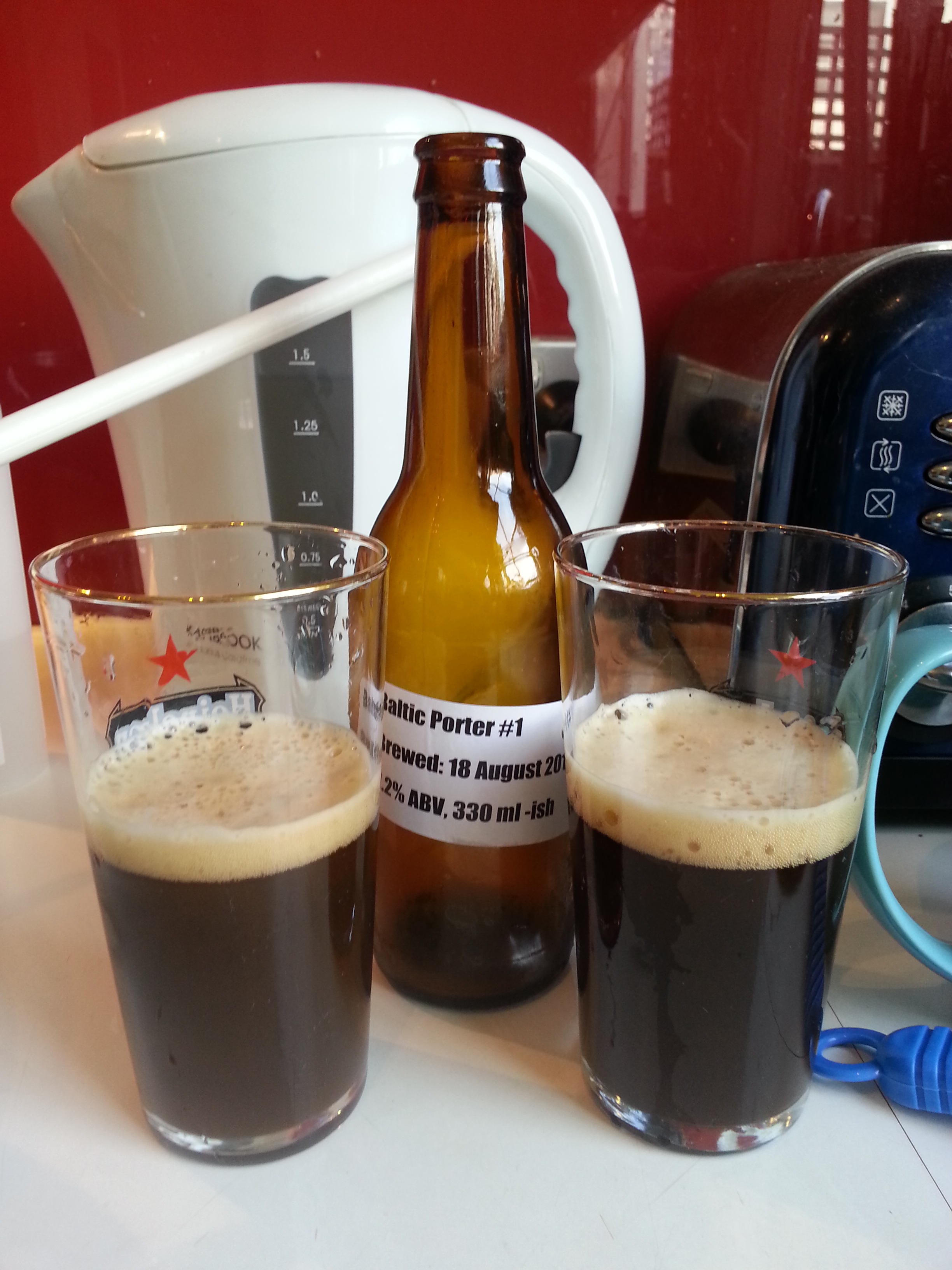
Mikey made his Baltic Porter while I was away, and luckily enough, it was ready for drinking as soon as I came back!

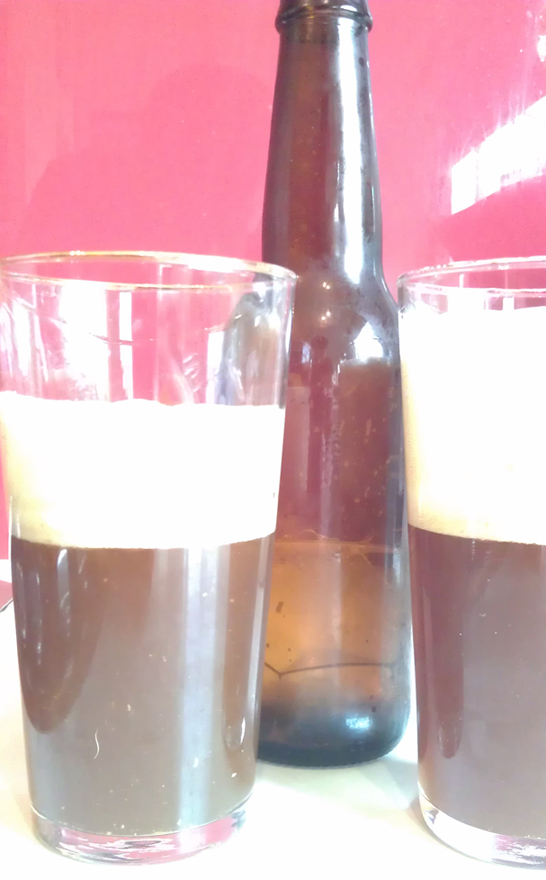
It definitely looked like a porter!  Nice and dark, good head.  That’s where the porteryness ended though – although it still turned out to be a great beer!

baltic porterOn the nose, there was a ton of apple and a bit of honey along with a bit of malt.  I’m not sure where the apples were coming from, but the honey was probably coming from the added Crystal grains.

This continued through with the taste, along with the apple.  This was right up front and very refreshing.

With that, there was a good amount of body, just not as much as I usually like to see in a porter.  So while it looked like a porter, this beer was very quickly moving away from what I’d consider a porter.  I’d classify this closer to a dark ale.  The good news is I love dark ales, and this was a good one, so I’m not complaining.

On the porter side though, there was a hint of the typical porter tang/bitterness at the very end, along with a very minor hint of smokiness, but the beer was so light it was still hard to call a porter.  It was a bit creamy like a porter, just not robust like a porter.

The surprising part about this beer is that it was 7.2% alcohol, which you’d never know by drinking it – until you’ve had a couple that is…  it’s a pretty smooth beer with only the slightest hint of dryness from the alcohol.

Overall, great beer, regardless of what you call it.  I’d gladly drink more.  Mikey wants to add some chocolate, which I’d welcome.

Given the sweetness and apple/honey tastes, this beer would go well with either apple or pumpkin pie.  It’s a desert kind of drink…

-Chas

Tagged , , , , , , , ,

Back to brewing after a holiday

I’m finally getting around to writing up last week’s brew!  It’s been a busy one for me…

After taking inventory last week, I’ve been spending all my down time trying to get through my collection; I need bottles for the batch that I made last week!

Anyway, as mentioned by Mikey, the Beagle Double IPA turned out to be a big beer.  It was great, but big.  Like most beer drinkers, I’m a big IPA fan, so although I like something like the Beagle, having a lighter and easier IPA on hand (especially for the upcoming summer) seemed appealing.  Since I hadn’t been brewing for awhile, I also wanted to get back into it with a really simple kit.

So Mikey and I went down to Brewcraft in Richmond to see what was available.  We picked up a bag of Mangrove Jack’s IPA wort and a kit converter.  Of course you put Mikey and me in a home brew store and we also both end up walking out with a bunch of other stuff that we “need just in case.”  This is why I have so much sanitiser.  But hey, we all know the Rules of Home Brew.

Anyway, it was a pretty simple brew containing:

  • Mangrove Jacks India Pale Ale
  • Blend of light and dark DME
  • Cascade hops
  • American West Coast Ale Yeast – BRY 97

Pretty simple stuff here.  Note that the Mangrove Jacks wort came with yeast included, but I generally prefer to buy yeast separately because you never know the quality of the included yeast.  The wort was also on sale because it was near its use by date, so once again, you just don’t know…

All we had to do was boil two litres of water, add the malt, and let that dissolve.  After that, we threw in the hops and let that steep for about 15 minutes.

This was then strained into a 30 litre fermenter with the Mangrove Jacks wort added as the fermenter was topped up to 23 litres.

Done and dusted!

The Cascade hops is a pretty middle of the road all rounder.  Plenty of spice in the smell with a bit of grass (at least for me).  I can sometimes find a little bit of chilly in there as well.  Of course there are also the typical florals found in a lot of hops as well.

I considered dry hopping, but then couldn’t really decide what to dry hop with.  Plus I want this to remain pretty light…

In the end, the wort smelled and tasted great.  It should turn out to be exactly what I want through the summer.

We’ll bottle next weekend and then see how it turns out a couple weeks after that!

-Chas

Tagged , , , , , , , ,

“The Beagle” Double IPA – Review

As Chas mentioned a few days ago, on the weekend we did a brew of an IPA. Chas will be posting the write up on that sometime soon.

The Beagle

The Beagle, double IPA in glasses

As part of any good brew day there are tastings of recent brews. One of those was the previous IPA, and a double IPA, The Beagle.

This is a very big IPA, which is what you would expect from a double. There’s plenty of hops across the board. Big round orange fruit aroma from the Amarillo hops.

There’s a lasting and solid body as the back bone for this beer. The body is sort of a sweet caramel amber style. The bitterness is quite strong and full across the length of the beer. Initial hops are large and quite a hit. After a couple mouthfuls you get use to it and the tasty hop flavours come out quite a bit.

About mid way into the beer the bitterness really kicks up a notch. And overall the bitterness is almost too much. The strong sweetness balances it a bit and saves this from being too crazy to enjoy. With a couple minor tweaks this could become an amazing beer.

Really good beer over all. It does demands your attention and you can’t try to do much else, not that it’s a bad thing. Sit down, shut up and enjoy.

Food? Nah, don’t bother trying to match anything with this. Okay, if I was pushed to find something then I might suggest something strong and salty like BBQ pork.

-Mikey

Tagged , , , , , ,