Oh my that’s hoppy, IPA gets brewed

Hoppy Heart IPA #1

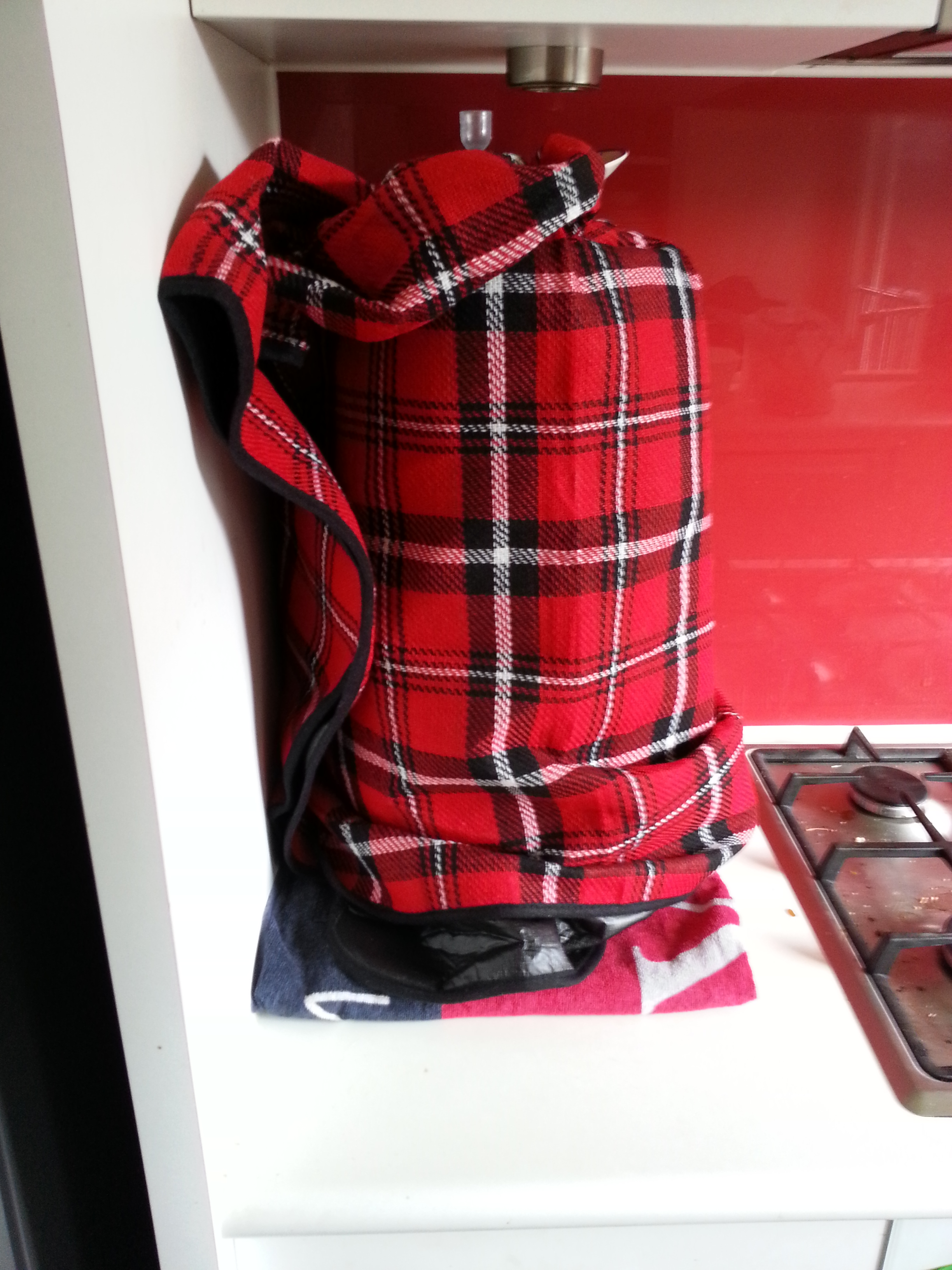
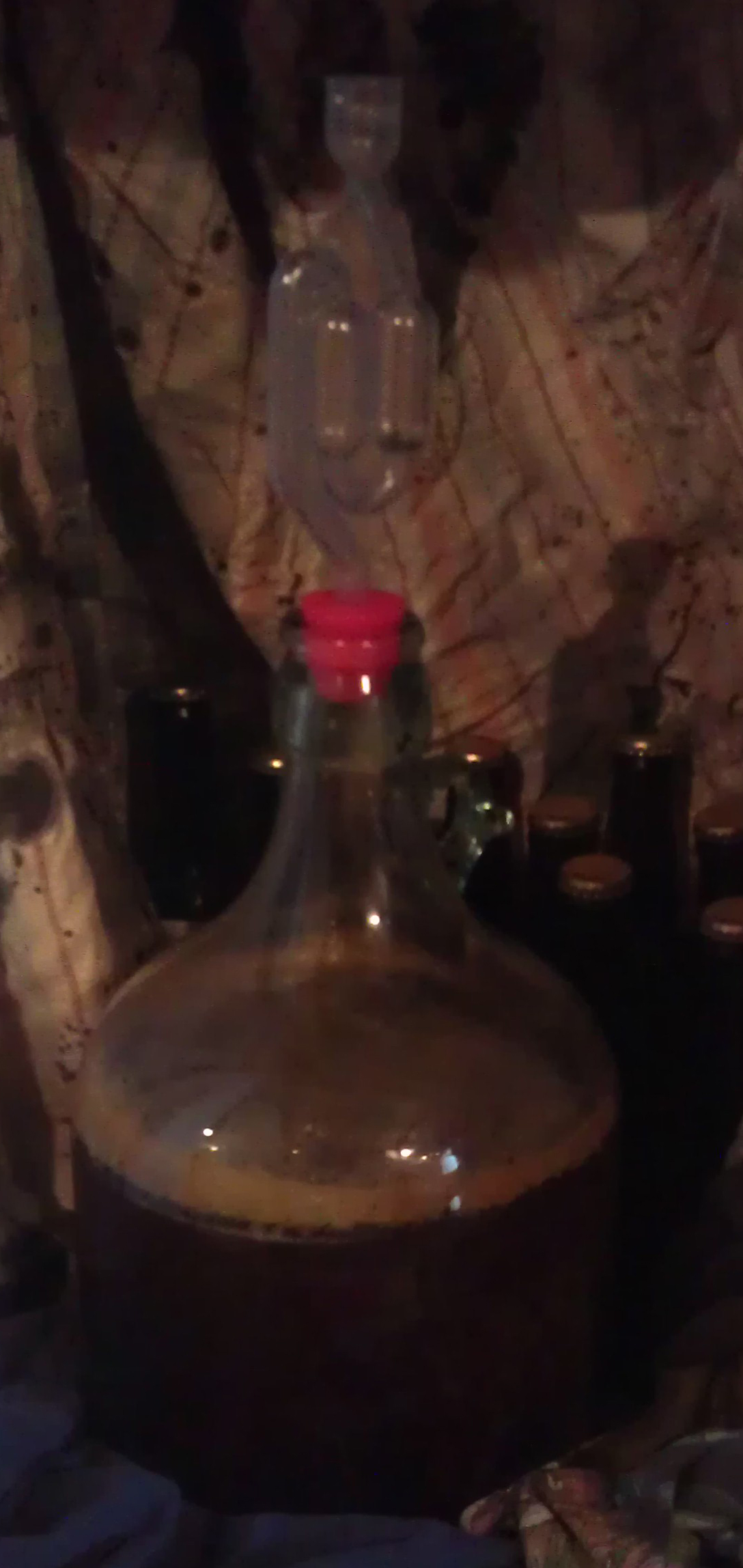
Hoppy Heart IPA #1 fermenting away in the cupboard. Porter #2 bottles in the back.

After brewing my second porter it was time to try something different. Something with plenty of flavour. Something for any day of the year. Something with a lot of hops. Something I like a lot. An Indian Pale Ale (IPA).

Keeping things small I went with the Brew Smith kit. All the ingredients are there and a good instruction booklet. Plenty of hops in this one.

Hops gives beer the bitterness and most, if not all, of the fruit flavours. Typically IPA’s are at the top end of the hoppy scale. Thus is done by adding more hops, and adding it later to the wort brew.

There is also an amount of dry hopping. This is when hops is added to the brew after the wort is prepared, put in the fermenter, and yeast added.

This being another kit from Brew Smith, was a partial boil. Malt and hops in the main pot for the base of the wort. Side pot for the grains to sit in. Then all together in the fermenter and topped up with water. Then put the simple airlock in place.

Two days later… remove the simple airlock, add the hops for Dry Hopping, and wack the proper airlock on.

This brew bubbled away for a couple weeks before it got bottled last Sunday, the 29th.

Tagged , , ,

Chocolate Paradise Porter – review

Chocolate Porter #2 tasting

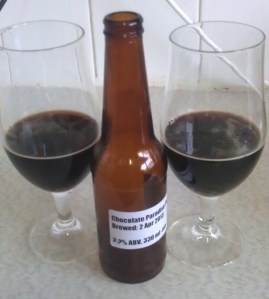
Chocolate Paradise Porter #2 for tasting.

Howdy!

Well, as Mikey mentioned in his last post, we tasted a porter that he brewed a few weeks ago.  We had the drink while bottling an IPA from Brewsmith that we made about two weeks ago, and then followed by making yet ANOTHER Chocolate Paradise Porter.  So, following the first and second rules of home brew, we had to be drinking home brew.  Why not kill two birds and do a tasting at the same time?

I’ll start at the beginning: the taste before bottling.

It’s important to taste your beer before bottling to make sure that there is nothing funky going on.  It lets you know that it’s turned out OK and gives you a general idea of how things will turn out.

However, prior to bottling, the beer has generally been sitting at a fairly warm temperature (optimal for yeast) and is most definitively flat.  So yes, the first taste is a taste of a warm, flat beer.  The beer also hasn’t been given a chance to fully mature, so it’s far from done.

Prior to bottling, the smell was near perfect.  The chocolate really came out and there was a little bit of smokiness to it.  Exactly what a porter should smell like.

The first sip, however, was interesting… it had a sourness to it that although wasn’t bad, wasn’t good.  It didn’t taste like it was off or infected, but the sourness gave us a bit of a worry.  We figured the beer would lose this strange aspect after some time in the bottle.

The first (second and third!) bottle:

The nose didn’t change at all.  There wasn’t anywhere for it to go really.  It was still smokey with a bit of chocolate.

In the first few sips, there was still a hint of sourness to the brew, but it seemed to come from the carbonation.  The carbonation was a bit strange, and it seemed to sit on my tongue a bit.  Obviously carbonation is a good thing, but I don’t want it to be something I’m acutely aware of – especially in a porter.

Fortunately, this weird carbonation thing went away after the beer was allowed to breath for a few minutes.

The chocolate flavours were there, but overall very subtle.  The chocolate came through in the nose much more than in the taste.

What really came out in the taste was the smokiness.  It was great, although dominant. Unfortunately this meant that the any complexities in the beer were taken away somewhat.  This left us with what was still a great porter, but with nothing that stood out except for the smokiness. Please don’t get me wrong, this is far from a bad thing.

I had a few bottles of this, one served at what was probably the optimal porter temperature, one served a little cooler, and one served at temperature too cold for a porter.

Overall I think I liked the coldest one best.  I think that this was because I found the beer surprisingly light and refreshing for a porter.  Beer is always great and refreshing, but there are different styles for different times.  This porter was surprisingly light and quite easy drinking.

So overall, the beer turned out great.  Usually I can spend a little bit more time on a porter, but this one went down far too easily.  It wasn’t complex, but a complex beer can often be harder to drink.

All in all, a great beer, and I’m happy at how it came out.

Now let’s see if Mikey leaves a comment telling me I’m wrong…

-Chas
Tagged , , , , , ,

Return to brewing, making the porter

In my last post I spoke about my first brew. Today I’ll be talking about my second brew, another porter.

The first brew I made was back in January. Then got busy with other things in life, like getting married and a honeymoon. After getting back I decided to get back to beer making.

The decision was to make the same porter from Brew Smith. It was nice, my wife likes the style, and it was going to be easy given I had done it before.

Brewing was done on 2 April 2013. Like the first time I made it, brewing was just me. Easy enough with the kit and took my time.

Chas came over to help with the bottling on the 14th. Great thing about these small brews is there’s not that many bottles to clean. Finally opened for tasting yesterday, the 28th.

I’ll leave the beer review for Chas. But what I will say is that the extra time, 12 days rather than 7, in the fermenter did it a world of good.

-Mikey

Tagged , , ,

First adventures – keeping things warm

Howdy!

So it’s been about five days since we did the brew I talked about in my last post, and I’ve been relatively happy with the progress.

As I mentioned in my previous post, there was some concern about keeping everything warm enough during the fermentation process.  We were also worried about the morning sun hitting the fermenting tub: the UV can harm your yeast and make generally bad flavours.  To solve these two problems, the brew spent the week wrapped in a blanket:

Beer needs to me tucked in nice and tight when it gets sleepy.

Beer needs to be tucked in nice and tight when it gets sleepy.

This worked surprisingly well.  The yeast manages to produce some of its own heat during the fermentation process, so this blanket kept everything in.  Although my house got as low as about 13 degrees C over night, the wort consistently sat at about 22 degrees C when I checked it in the morning.  It could be a little warmer, but this is still a great temperature. And it was relatively constant, so that’s great.

Another alternative I’ve heard being used is to place your fermenter in an old bar fridge (not on). Refrigerators are extremely well insulated, so this method will keep everything warm (or cool), and more importantly constant.

In warmer months, this method can also be used to keep things cool, just don’t leave the refrigerator on constantly, otherwise things will be too cool.  If you get a fancy enough fridge (or a wine fridge), you may even be able to set it to work at a higher temperature.

Generally, the higher the temperature, the faster the fermentation process is – to a point obviously; if things get too hot, you’ll kill your yeast.  According to the packet, the yeast we used has an optimal temperature range of 21-28 degrees C.  So since the we’re running on the lower end of that scale, the fermentation process will probably take about eight or nine days.

So next step: bottling!  But that’s still a few days away…

-Chas

Tagged , , , , , , ,

Starting small, but not dumbing it down.

Choc Paradise Porter #1

Chocolate Paradise Porter #1 in the carboy with airlock

I promised Chas that I’d put something up about my first few brews. And here we are. The whole home brewing thing has been a journey that started about two years ago. Won’t go into all that today, that’s another story.

Back in October 2012 I decided that it was time to try this brewing at home thing. I requested a brew kit for my birthday from my wife. But I couldn’t really decide on what type. Presents didn’t turn up until start of January 2013 because of my inability to chose. So I got both.

I could launch into the different kits, but again, that’s for another time.

My first brew was on 5 Jan 2013. It was a ‘Chocolate Paradise Porter’ from Brew Smith. The team at BrewSmith take a lot of complexity out of making beer, and still allow you to make some good quality beer. You use a 5 liter carboy. This is like a giant glass bottle. End result is 12+ stubbies (330ml-375ml) of beer. Due to the size of the carboy and amount of beer, this is sometimes referred to as apartment brewing.

Anyway, back to the beer. This Porter is made with a partial boil so it means making wort yourself with malt, hops and grain. The whole brew process on the stove takes an hour. Prep work is about 10 mins before. Then there’s about 30-40 mins of cool down and getting it into the carboy. All up you should be done under two hours.

Bottling was on the 12th. That was probably too early. Cracked open to drink on the 26th.

How did it turn out? Pretty good. Without telling my wife the beer was ready I gave her a taste test. She didn’t even pick that it was home brew. The beer did lack body and the chocolate flavor was a bit light, but everything else was there.

Overall this was really easy. Beer was really good and happy with the outcome.

-Mikey

Tagged , , , , , , ,

Brewing can be easy and fun, and a bit tedious

Thought a good first post would be one that covers one of the basics of home brewing.

As Chas mentioned yesterday, sanitising is king. The reason is that any bacteria that gets in can ruin your beer.

The beer making process is basically:

  1. Make a tasty sugary liquid.
  2. Add yeast which turns the sugar into alcohol.
  3. Make it bubbly.

Now there is obviously a lot more going on than that.

The tasty sugary liquid is called wort. And I’ll be using that name going forward, even though “tasty sugary liquid” does sound awesome.

Your wort is very vulnerable to all types of bacteria. Whatever gets there first will go crazy eating and growing. We only want the yeast to do that.

Hence making sure everything that touches the beer is:

First cleaned of any dirt, liquid, grime, dust, gung, bits, and whatnot.
Second sanitised to kill all bugs, bacteria, yeast, and tiny bad things.
Finally rinsed (if needed) and kept free of contamination.

This process can take a long time. Sometimes longer than all other steps combined! But if you get it right, which isn’t hard, then you’re well on your way to make tasty home brew beer.

-Mikey

Tagged , , , , ,

First adventures in home brew

Thomas Coopers Heritage Lager

Thomas Coopers Heritage Lager and fermenter

Howdy!

My friend Mikey and I have recently decided to start making home brew. In this blog, we’ll be documenting our brews, sharing what we’ve learned, and hopefully stimulating some discussion and just generally see what happens.

Today, Mikey and I made our first 23 litre batch using a fairly standard starter kit that you can get from most home brew stores. We figured this was a good place to start. The kit came with pretty much everything you need, including a can of Thomas Coopers Australian Lager mix. We made a smaller batch last weekend, but I’ll let Mikey get into that.

These mix cans are a great place to start because it makes the process very easy, albeit probably a little bit too simple. This way though we were able to concentrate on the most important part of home brewing: sterilization.

If you’re interested in getting into home brewing, remember: sterilize EVERYTHING. If any nasties get into your wort, your beer will not turn out. So stay clean and err on the side of caution.

So from there it was just pour the contents of the can into the fermenter with two litres of boiling water – remember, let the can sit in some hot water for about 10-15 minutes, it makes it pour much easier. Pour in some dextrose, fill the the fermenter to 23 litres and you’re pretty much done.

When filling the fermenter, make sure the water is at about 20-25 degrees C before pitching your yeast. And of course make sure everything is stirred thoroughly.

Before pitching your yeast, make sure to take a hydrometer reading to get the original specific gravity (OSG) of the wort. Today we got an OSG of 1.038. The higher the OSG, the higher the alcohol content of the final brew. 1.038 is not terribly high, but it’s pretty good, and we should get a final alcohol content of about 4.5-5.5% or so.

Following that, pitch your yeast, stir that in, put the lid on the fermenter, place your airlock and you’re done… The whole process took about 45 minutes, not counting some initial cleaning and sanitizing.

The instructions said that the fermentation process should take about 6-8 days, but we’re anticipating longer as it’s a bit cool at the moment. Once all of that is done, it’s time for bottling!

While we wait, Mikey has another fermenter at his house as well as the same Coopers kit we used today. Rather than adding the dextrose supplied, we’re planning on using a malt extract to bring out a little more flavor. We’ll report in after we brew that.

-Chas

Tagged , , , ,