Carnie Pale Ale IV – Review

Carnie Pale Ale IV

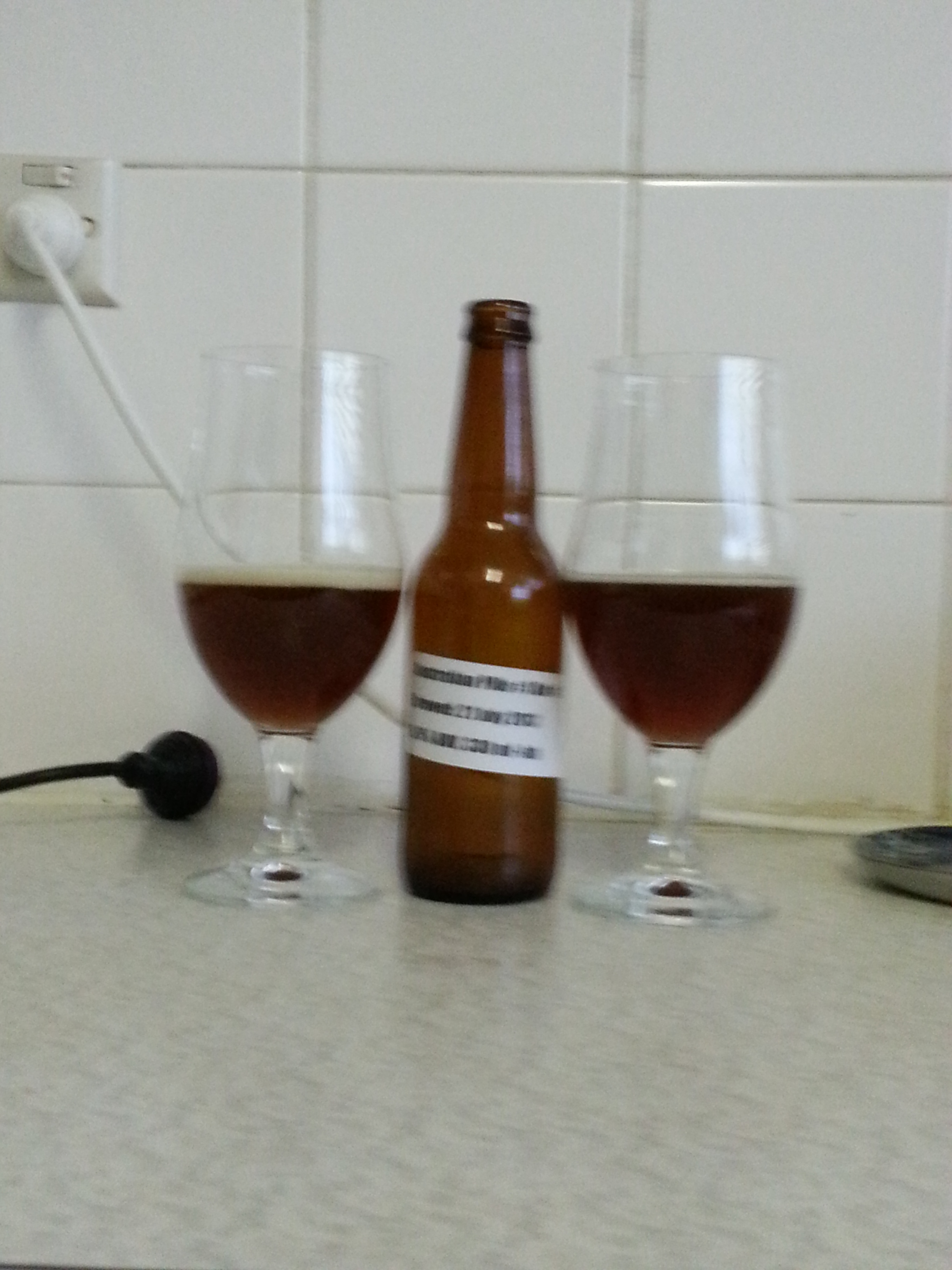
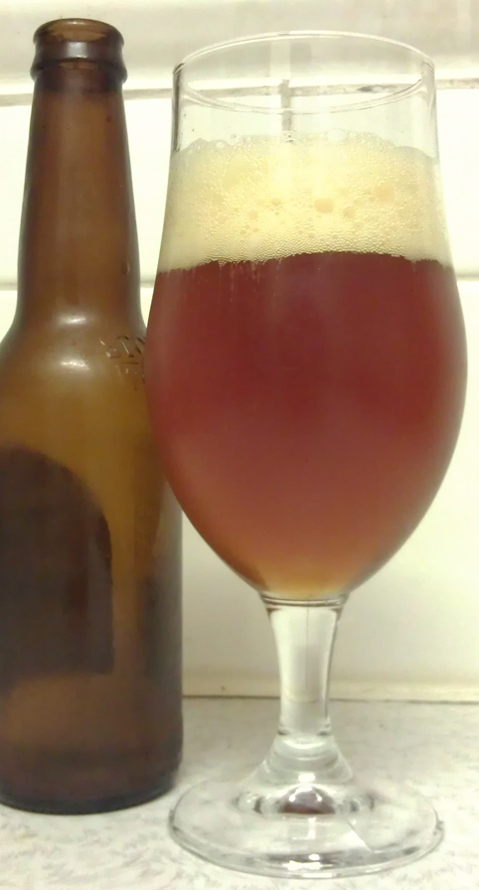
Carnie Pale Ale IV ready for drinking

A couple days ago I put up a review of a Pale Ale from a fellow home brewer. The second beer I was able to take home was the Pale Ale IV.

There are a few similar traits that the IV has with the III. But, then there’s a whole lot more goodness. Over on Carnie Brews blog, brew 13 lists the ingredients that went in to this brew. There’s a slight change in hops and a wider range of steeped grains.

Aroma is similar to the Pale Ale III. Both apricot and earthy aromas are there but the vegetable-ness is barely there. The apricot is a bit tamed back as well. Overall nothing massive on the nose.

Flavours is where this all comes together. More body up front and lasting the whole way though. This gives everything else more of a base to work off. Apricot hop flavour comes out a bit and rounds out nicely. Not the same dryness of the previous version at all. Does still have a slight tart end to it.

This beer is definitely a step up on the last version. Seams to be balanced a lot more and easier to drink. While being strong in alcohol you can’t really notice, other than the bigger body. This is the sort of beer that says ‘yes, you can add more things and make it better’.

Food matching, this would go well with a lot of things. Any good pub meal or take away from your local fast food joint. Equally would work with any weeknight home cooked meal.

-Mikey.
Tagged , , , ,

New 101 – brew types

Another Thursday and another 101. This week I’ve put up some information on the four brew types; Kit & Kilo, Extract, Partial Mash, and Full Grain.

A quick note. Some people think that Kit & Kilo (K&K) brews are just Extract brews. I’ve provided a bit of background as why we’ve kept them as different types of brew.

The 101 on equipment has been pushed back a week for this one to go up. I felt it was important to cover off the brew methods first as this impacts the processes, what ingredients are needed and what equipment you use.

This weekend there’s no home brewing as Chas is glob trotting. I’ll get one or two home brew reviews up over the next few days.

-Mikey

Tagged , , , , ,

Carnie Pale Ale III – Review

Carnie Pale Ale III

Carnie Pale Ale III ready for drinking

Just over a month ago I met up with a guy from work who also does home brewing. We shared some stories, had a few drinks and swapped some bottles. You should check out CarnieBrew’s blog.

The first bottle I’ve tried is the Carnie Pale Ale III. If you want to see some more info you can see the ingredients in Brew 11.

There’s a fair amount of Cascade and Amarillo hops that went into this beer. Plus a lot of liquid malt. The result is a bit of a mixture of flavours and characteristics.

The aroma plays around with the two hops. Giving both an apricot and an earthy smell. A hint of vegetable is also in there, which reminds me of some Moon Dog beers I’ve had in the past.

The initial flavour is light. Then things build up with a tart and dry body. The fruit/earth from the aromas comes on a little but the vegetable flavour is what I taste stronger. It finishes quite dry and with a bit of tang.

I think the parts that I don’t like might be due to the yeast or use of wheat liquid malt. I’m not a huge wheat fan myself. Then there’s a fair few things I do like here, the hop smells and flavours seam to be quite nice. And the beer hides the alcohol very well.

Overall this reminds me a lot of Moon Dog beers. And as such, I would recommend any food with a bit of kick to fit with this. Maybe a spicy stir fry or a gumbo dish.

-Mikey

Tagged , , , ,

Brewing alone, and making a mess

Chas is still overseas, and will be for a couple more weeks. So this week’s brew, and next one in two weeks time, will be sans Chas. Next brew I hope to be joined by Ian, but this week it was just by my lonesome.

Like any normal brew day first thing is to bottle the last batch. So, most if the 10 litres of Baltic Porter #1 made it’s way into bottles. I say most because, (1) there was a gravity reading sample to be taken, and (2) there was an accident. The little thing that regulates the flow of beer (aka the bottling valve) fell off into one if the bottles as I was filling it. I freaked out a bit, thinking to get as much as possible into bottles before remembering there was a tap! Once things were under control again I reattached the bottling valve and had no more problems. Needless to say I’ve got some bottles that I’m not sure how they’ll condition, and they all marked with a question mark.

Final gravity came in at 1.021. That means after bottle fermentation it will sit at 7.2%. I’m very happy with that.

Mildly Dark #1

The Mildly Dark #1 sitting in the fermenter.

As this was a solo affair, had a sizeable break before brewing.
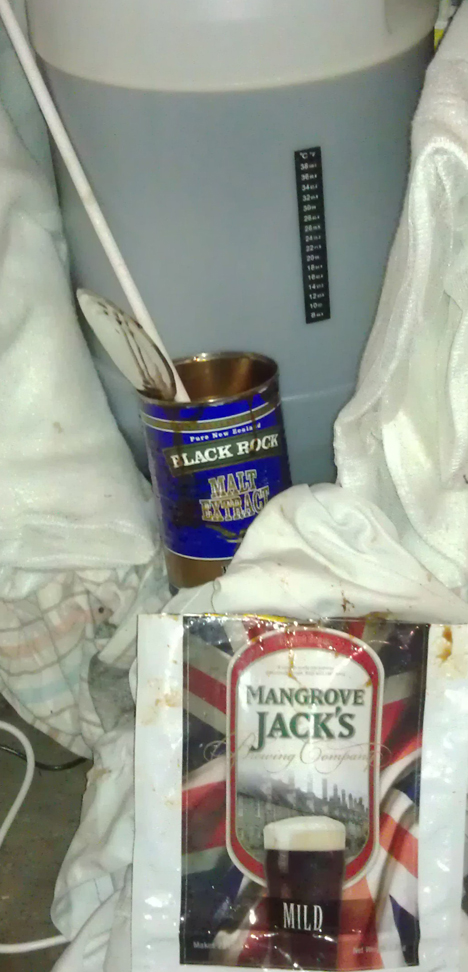
Back a few weeks ago when I picked up the ingredients for the Baltic Porter #1 there were a couple other things I picked up as they were on special. The main thing was the Mangrove Jack’s Mild kit. It’s a liquid malt extract and known for having some decent quality.
I also picked up some “factory second” dry malt. It was recommended to boil up the stuff for use. I just threw it into boiled water, and had a little problem getting it to dissolve.
Finally, had a can of dark liquid malt extract that I bought by mistake earlier on.

All up this was a kit with a lot of malt additions, both dry and liquid. Given the mistakes of the Australian Pale Ale #1 and Australian Amber Ale #1, I’m feeling a lot better about this brew. Given the extra dark malt I’ve dubbed this beer Mildly Dark #1.

Ingredients:

  • Mangrove Jack’s Mild kit
  • 500g “factory second” DME
  • 1.5kg Black Rock LME

Gravity ended at 1.056. Happy with that. If it ferments down to around 1.020 then the final ABV will come in around 5%, and that’s something to look forward to.

-Mikey

Tagged , , , , , , , ,

New 101 – Cider

Like some ghost from beyond the grave, Chas has put up the new 101 from the other side of the globe while asleep. No, it’s not some crazy magic. Okay, maybe it is.

This week’s 101 is on Cider. Chas wrote this up before he ran overseas. By all accounts the beers in Scotland are great, as you would expect from the UK.

Like all our 101’s let us know if you think anything should be changed. We’re not perfect and always learning more.

-Mikey

Tagged , ,

Australian Pale Ale # 1- Review

So, the Australian Pale Ale was ready for drinking.  Kind of…

This brew was Mikey seeing what would happen if he added a full can of malt (usually for a 20 litre brew) to only four litres of waterAus pale ale.  It didn’t turn out too well.

Firstly, it was very dark for a pale ale.  The malt hadn’t been diluted enough so it was still fairly dark.

In the smell, it was very sweet and very malty.  A few floral smells managed to make it through, but it was tough to find them through the sweetness.

This continued on through the taste, which was extremely overpowering.  As mentioned, this was a whole can of malt for a very small batch.  The beer was excessively malty and very sweet.  It was also very thick.  It was not unlike cordial when not enough water is added; still much too concentrated.

Unfortunately there isn’t much else to say about this beer.  The malt and sweetness was so overpowering, there just wasn’t much else there.  Mikey insists that he was able to find some hops tastes in there, and granted, there is a little bit of bitterness coming through, but not much.

Anyway, adding way too much malt  does not bear the best results.  Sorry Mikey, this isn’t the best creation…

– Chas

Tagged , , , , , ,

“Gauss’ Law” Hopped Cider – Review

Quick note that there’s no brewing this weekend. Chas is overseas and I’ve already got a brew in the shed.

Last weekend we tried a few different brews. Chas has already put up his review of the stout. The review of the Australian Pale Ale will go up in a couple days.

Another one we tried was “Gauss’ Law” Hopped Cider. Another experimental cider from Chas. As was pointed out to us, a malted cider is called a Graff. Not sure what a hopped cider (with no malt) would be called. Anyway, we got around to share a bottle. And at over 10% alcohol I’m glad we didn’t have one each.

First up there was plenty of earthy apple aroma. Rich and woody without a strong sweetness. Good on the nose and matches well with the flavours.

Wow, this is complex and tasty. Initially it’s light and easy with the apple coming in quite subtlety then building big. It’s not until mid-late into it before the hops kicks in. There’s a good citrus hop flavour that sticks around for a long time. The bitterness keeps the apple in check and there’s no sickly sweetness anywhere in sight. If anything there’s a bit too much hops here. Bitterness does get a bit much after half a glass. But, that may be a good thing given the alcohol level in this.

Food wise this would match really well with duck, turkey or chicken. Preferably roasted. Would also work with pork.

If Chas makes more of this I’ll definitely be getting my hands on a couple bottles for myself.


-Mikey

Tagged , , , , ,

New 101 – beer ingredients

So, far so good. First 101 went up last week and a week later second one is going up.

This week we’re looking at the basics of beer ingredients. There’s a lot of detail behind it all, but really there’s four main ingredients  MaltHopsWater and Yeast.

Page is under the 101 section. Hope you like it. Let us know if you think something else should be added, removed or fixed.

-Mikey

Tagged , , , , ,

Lesson learnt, a bit too late

On Sunday we had another brew day at my place. Was time to do another Porter and a using some grain for the first time since the Brewsmith kits.

There was bottling of the Australian Amber Ale and tasting of the Australian Pale Ale. Both are a lot darker than ‘amber’ or ‘pale’ and should be renamed ‘dark’ and ‘amber’. The tasting of the Amber was, how should I put this, bad. The idea behind the two brews really wasn’t thought out well enough. I had assumed the sugars in the liquid malt cans would mostly ferment leaving only a slight sweetness. I was very wrong. And I should have realised it when we did the gravity readings. Chas has a review that will be going up, but to summarise… it’s bad. The amber came in at lower gravity than the pale, so that might be worse. I’m not going to even attempt tasting the Amber Ale in two weeks. I think both beers need to condition for a number of months, maybe six or more.

So, with that in mind I’m very glad we did a brew of something that should turn out a fair bit better. Or at least in theory. The brew can’t be classified as a ‘Partial’ because the grains used were crystal. That means no enzymes to convert starch into sugar, aka a mash. This was Steeping of the grains, and therefore this brew should be classified as an extract. Plus a can of amber liquid malt extract was used. There was 500 grams of Crystal (ebc 115-145) used.

Baltic Porter #1

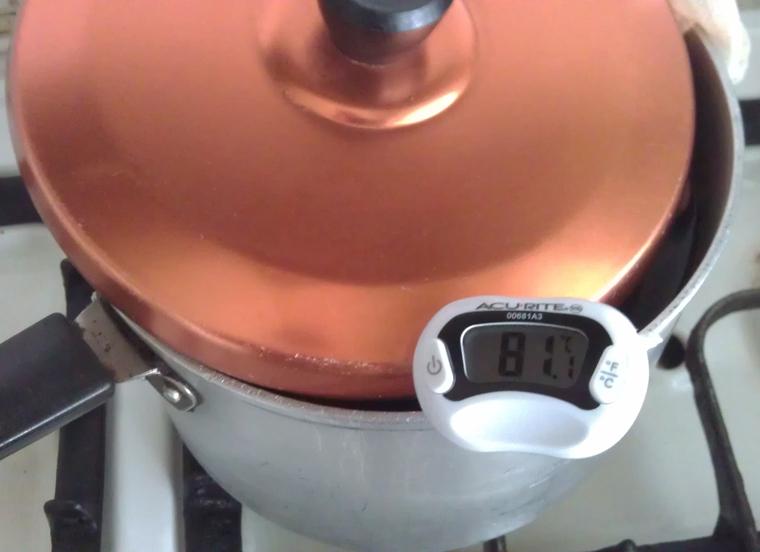
Grains for Baltic Porter #1 steeping in the pot

I wanted to get the most out of the grains so steeping occurred for a full 60 mins at around 80C. I say around 80C as the temperature wasn’t fully controlled the whole time. It dropped down to around 77C and was as high as 86C at one point. Not great. But, in defence it was only steeping and not mashing.

And so the Baltic Porter started.

After steeping there was a sixty minute boil. The can of liquid malt and the liquid from steeped grains were all thrown into the wort. Once the hot break occurred in went 7 grams of Warrior hops.

After 30 mins there were 3 grams of Fuggles added. Then finally another 2 grams five mins before flame out. This was then put in the big 30L fermenter and topped up to the 10L mark. Windsor hops were added and fermenter given a good shake to get more oxygen due to the expected high alcohol.

  • Crystal grain (ebc 115-145) – 500g
  • Black Rock Amber liquid malt extract – 1.7k (cans are now bigger)
  • Warrior Hops – 7g
  • Fuggles – 5g (split 3-2)
  • Danstar Windsor yeast – aprox 5g

The original gravity was calculated at 1.081, but only came in at 1.072. That’s probably a good thing considering what happen to the two Australian Ales recently brewed.

The day had some painful lessons. And they were kept to small batches so there’s not too much pain. If this Baltic Porter turns out bad I think it might be time to return to some kits for a little bit.

-Mikey

PS. Forgot to mention we tasted the Black Rock Miners Stout and Gauss’ Law hopped cider. Review for stout is up and review of Gauss’ Law will be coming soon.

Tagged , , , , , , , , , , , , ,

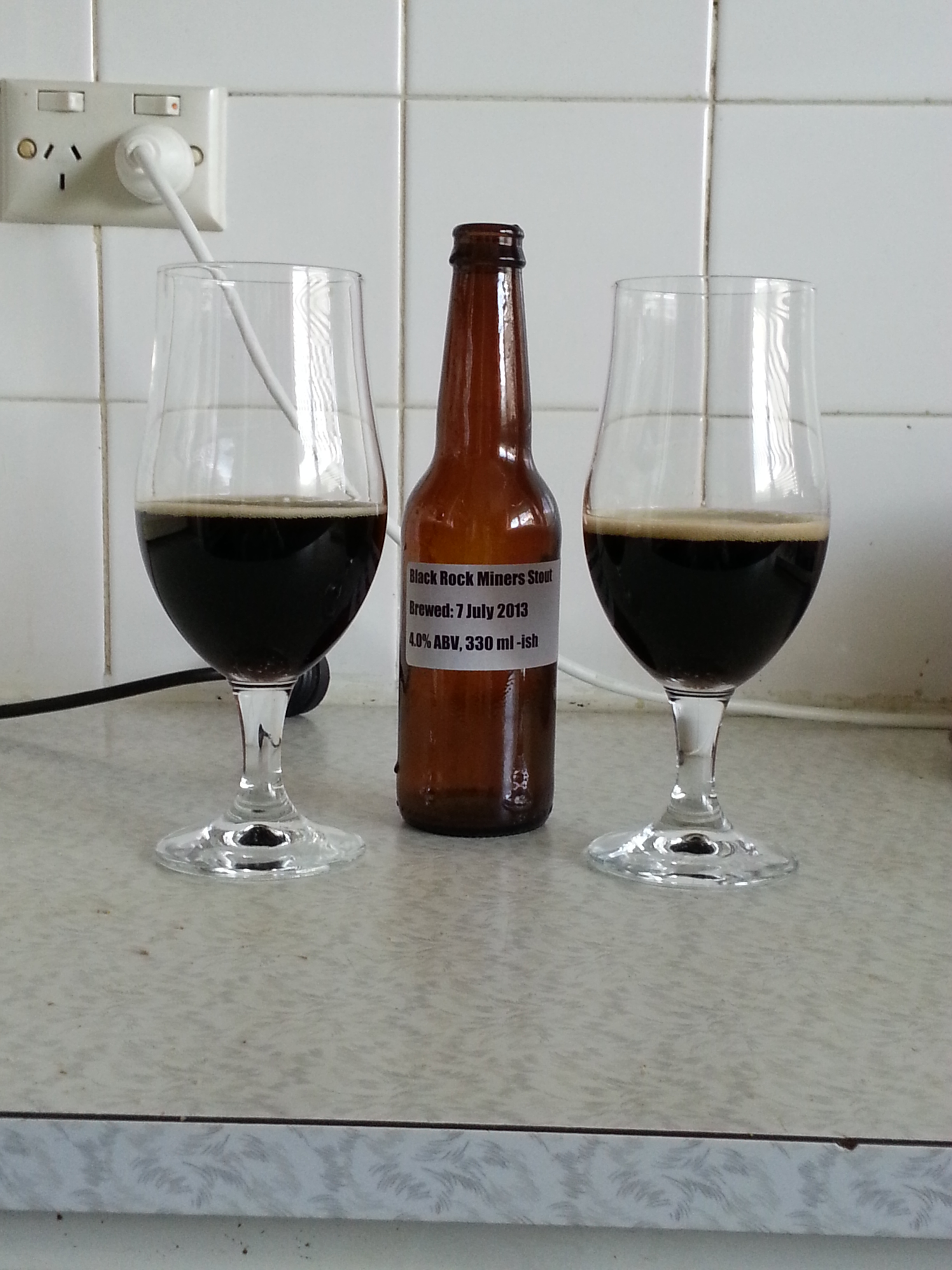
Black Rock Miners Stout – Review

Stout, stout, stouty stout stout.

Yesterday we tasted the Black Rock Miners Stout in addition to doing a brew that I’m sure Mikey will write up.  We also tasted the Gauss’ Law Hopped Cider as well as Mikey’s Australian Pale Ale.  Reviews of these will be coming as well.

Anyway, the stout!

First of all, it looked very much like a stout.  Very dark, decent head while pouring, although the head retention was lacking a little bit.

Unfortunately there wasn’t a whole lot of aroma; the aroma was there, but quite very subtle.  I wasn’t able to get much out of it, but there were hints of brown sugar, chocolate, general sweetness and some malt and sticky smells as well.  There wasn’t much in terms of overt hops smells, but that is where some of the sticky sweet may have been coming from: floralStout mixing with the malt perhaps.

On the first taste, it was apparent that this is a weaker stout of 4% ABV with very little body, especially for a stout.

The subtle chocolate flavours continue as well as the subtle malt flavours, but other than that, the flavour is just “there.”  There wasn’t much to put my finger on, nothing obvious coming out to set it apart.  All the fairly standard stout flavours were there, but nothing to talk about.

As it was a stout, I wasn’t expecting any wild hops tastes, but, that being said, I couldn’t find much hops in there except for a mild amount of bitterness.  I would have liked maybe some floral or spicy flavours in there, just to add a bit of a twist.  Then again, I’ve been drinking a lot of imperial stouts lately, so maybe my pallet for stouts is a bit off…

Overall, it’s a good beer, but not great.  It’s very accessible but very middle of the road.  Because of this, it would make a fairly sessionable stout.  It would also make a good introduction to stout for those who don’t usually drink it.

In relation to food, these heavier beers generally go with heavier, meatier dishes, and this is no exception.  I think stouts are always good with barbecue, but I’d reserve this for a barbecued white meat like chick.  I also think that this stout is light enough to enjoy with a relatively hardy pasta with a good thick red sauce.

-Chas

Tagged , , , , , , , ,